
CELEBRITY
Iranian Su-35 Tries to Locks On – Then an Invisible F-22 Drops Out of the Sky in a 90-Second Standoff. 90 Seconds Over the Gulf: The Intercept That Never Became a War The Persian Gulf often looks calm from 25,000 feet. But beneath that stillness lies one of the most closely monitored and strategically sensitive regions on Earth. On this particular day, tensions were elevated. The USS Abraham Lincoln and its carrier strike group had entered the region, signaling heightened military readiness amid ongoing geopolitical friction. High above, an MQ-9 Reaper drone cruised methodically along its assigned reconnaissance route. Unarmed and operating at roughly 230 miles per hour, the aircraft’s purpose was surveillance—not confrontation. But elsewhere in Iranian airspace, a newly acquired Su-35 Flanker-E lifted off to intercept. The Su-35 represents one of the most advanced fighter aircraft in Iran’s arsenal. Equipped with powerful twin engines, thrust vectoring for extreme maneuverability, advanced radar systems, and modern air-to-air missiles, it is designed for dominance in contested skies. Its pilot, highly trained and disciplined, received clear orders: intercept the American drone near the edge of Iranian airspace and conduct visual identification. ….To be continued via the link below 👇👇

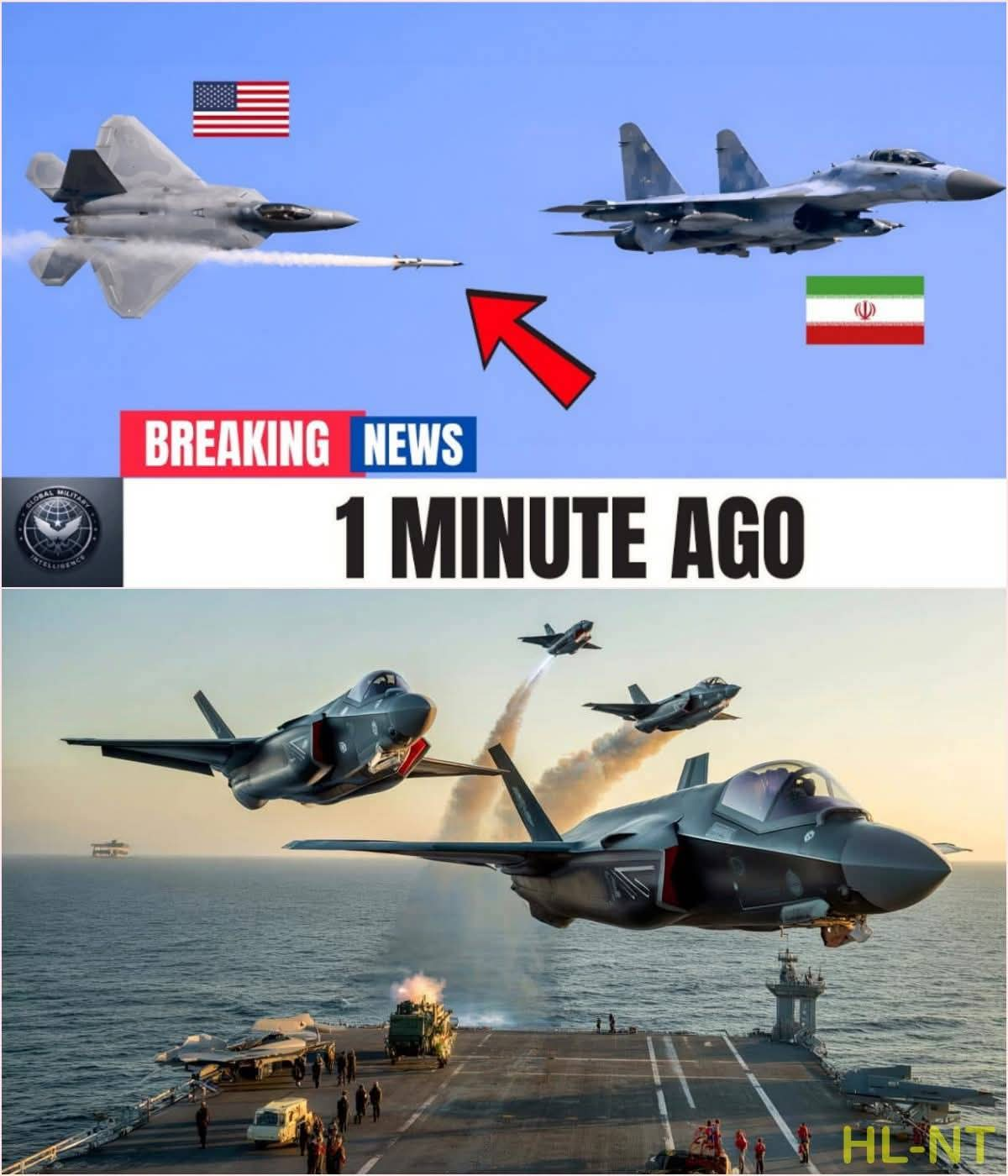
90 Seconds Over the Gulf: The Intercept That Never Became a War
The Persian Gulf often looks calm from 25,000 feet. But beneath that stillness lies one of the most closely monitored and strategically sensitive regions on Earth. On this particular day, tensions were elevated. The USS Abraham Lincoln and its carrier strike group had entered the region, signaling heightened military readiness amid ongoing geopolitical friction.
High above, an MQ-9 Reaper drone cruised methodically along its assigned reconnaissance route. Unarmed and operating at roughly 230 miles per hour, the aircraft’s purpose was surveillance—not confrontation.
But elsewhere in Iranian airspace, a newly acquired Su-35 Flanker-E lifted off to intercept.
The Su-35 represents one of the most advanced fighter aircraft in Iran’s arsenal. Equipped with powerful twin engines, thrust vectoring for extreme maneuverability, advanced radar systems, and modern air-to-air missiles, it is designed for dominance in contested skies. Its pilot, highly trained and disciplined, received clear orders: intercept the American drone near the edge of Iranian airspace and conduct visual identification.
At 40 kilometers, the targeting system locked. The intercept proceeded according to protocol. Visual confirmation would come first. Engagement was not authorized without escalation orders.
What the Iranian pilot did not know was that he had been tracked since shortly after takeoff.
Sixty miles away and 12,000 feet above, an F-22 Raptor had already positioned itself.
The F-22, a fifth-generation air superiority fighter, is designed around stealth, sensor fusion, and information dominance. Unlike older aircraft, it integrates radar, infrared tracking, electronic surveillance, and secure data links into a single cohesive tactical picture. By the time the Su-35 began its intercept run, the Raptor had already assessed its trajectory and intent.
As the Su-35 closed within 10 kilometers of the MQ-9, the Iranian pilot prepared to issue a radio challenge. The drone continued its steady course.
Then the dynamic changed.
The F-22 disengaged autopilot and descended at supercruise speed—supersonic without afterburners, minimizing infrared signature. The closure was rapid. In less than a minute, it was overhead.
Suddenly, the Iranian cockpit lit up with warning signals.
The radar warning receiver activated. Threat indicators flashed. The pilot scanned visually—but saw nothing. No radar contact. No visible aircraft.
Then, briefly, a shadow crossed his canopy.
Above him—flying inverted at close range—was the unmistakable silhouette of an F-22 Raptor.
At an estimated separation of just 30 meters, the message was clear: you were never alone.
The Iranian pilot now faced a dramatically altered tactical reality. The Raptor had achieved undetected positioning within lethal range. Any aggressive maneuver risked immediate defensive response—or collision.
Over emergency frequency, the American pilot transmitted calmly:
You are being monitored. Break off your intercept and return to base immediately.”
He initiated a hard turn and disengaged.
Within seconds, the Su-35 was heading back toward its departure point. The F-22 closed its weapons bay, rolled upright, and resumed patrol. The MQ-9 continued its mission uninterrupted.
The incident illustrated a defining feature of modern air power: information dominance. Fifth-generation aircraft like the F-22 combine stealth, sensor fusion, and networked awareness in ways that fundamentally reshape aerial engagements. It is not merely about speed or maneuverability—it is about who sees whom first, and who controls the decision space.
For military planners, such interactions provide valuable insight into real-world performance. They test doctrine. They validate training. They clarify technological gaps.
But beyond hardware and tactics lies a broader lesson.
Deterrence is most effective when capability is demonstrated without violence. The encounter over the Gulf showed how overwhelming advantage—when exercised with discipline—can prevent escalation rather than provoke it.
Both pilots acted professionally. Both followed orders. Neither sought conflict.
In a region where miscalculation could trigger wider confrontation, restraint mattered as much as technology.
The skies over the Persian Gulf returned to quiet that day. The carrier group continued operations. The Su-35 returned to base. The Raptor remained unseen once more.
And for 90 seconds, the boundary between tension and conflict was held—not by missiles, but by measured judgment.

Taylor Swift and Travis Kelce Turn an Ordinary Day After NFL Practice Into a Viral Moment as the Superstar Couple have fans laughing out loud and unexpected splash Loses Their Balance and Falls Off a Paddle Board While Enjoying a Carefree Summer Escape Proving the World’s Biggest Power Couple Knows How to Have Fun Together

Travis Kelce reacts to Prince William’s cheeky confession about viral Taylor Swift selfie

Taylor Swift’s wedding dress recreated: See the stunning off-the-shoulder design, cinched waist and massive veil 👰♀️ 🔗

Angelina Jolie Spotted Out With 81-Year-Old Boyfriend? What We Know About the Actress’s Love Life After Brad Pitt Divorce

🚨💔 10 MINUTES AGO: BUCKINGHAM PALACE ANNOUNCES HEARTBREAKING ROYAL DEATH! Prince William Stands Beside a Tearful Kate as She Breaks Down and Says, “It Is With Our Deepest Sorrow That We Announce…

😱🚨 “SHE NEVER EXPECTED THOSE IMAGES TO GET OUT” — THE MYSTERIOUS PHOTOS SPARKING A SOCIAL MEDIA FRENZY!

Puerto Rico Artist, Bad bunny pictured with his new boyfriend in a party, proving rumor of him been bi- sexual 🏳️🌈true.

11 minutes ago, King Charles made a SAD Announcement! Prince Harry has…. (For Full Information, Check Link In Comment👇🏻👇🏻)

After the Long Wait, Taylor Swift Finally Reveals 7 Never-Before-Seen Photos and 1 Video From Her Star-Studded MSG Wedding to Travis Kelce! Fans Can’t Stop Rewatching the Video ⤵️

47-year-old actor Kevin Hart recreates Rihanna’s 2026 Met Gala look for Halloween. SEE MORE HILARIOUS PHOTOS HERE…

70 year old kris Jenner looks stunning in recent photos showcasing her baby bump. Isn’t she too old? Congratulations to her though
