
CELEBRITY
Inside Story : JFK Jr and Carolyn Bessette’s REAL dying moments revealed in horrifying minute-by-minute detail: Her passenger seat terror… the graveyard spiral… violent moment of impact… and his last five words

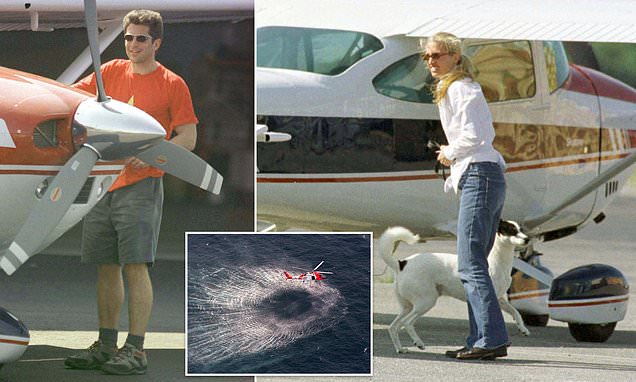
On the evening of July 16, 1999, John F. Kennedy Jr., his wife Carolyn Bessette Kennedy, and her sister Lauren Bessette departed New Jersey aboard Kennedy’s single-engine Piper Saratoga, bound for Martha’s Vineyard. What began as a routine summer flight ended in one of America’s most heartbreaking aviation tragedies.
According to the official investigation by the National Transportation Safety Board (NTSB), Kennedy, who was not yet instrument-rated, encountered hazy nighttime conditions over the Atlantic Ocean. The limited visibility made it difficult to distinguish the horizon from the water, creating an environment where pilots can become disoriented if they rely on visual cues alone.
Investigators concluded that Kennedy likely experienced spatial disorientation—a phenomenon in which the body’s sense of balance conflicts with the aircraft’s actual movement. This can lead a pilot to unknowingly place the aircraft into an increasingly steep descending turn, sometimes referred to as a graveyard spiral.
Radar data indicated the aircraft descended rapidly before impacting the Atlantic Ocean near Martha’s Vineyard. The collision with the water was catastrophic, and all three occupants died instantly from the force of the impact.
Because there were no cockpit voice or flight data recorders aboard the privately operated aircraft, investigators could not determine what was said inside the cockpit during the flight. As a result, there is no verified record of John F. Kennedy Jr.’s final words or any conversation among the passengers.
Over the years, numerous books, documentaries, and online articles have speculated about the final minutes of the flight. However, claims describing Carolyn Bessette’s “terror,” dramatic final conversations, or Kennedy’s alleged “last five words” are not supported by official evidence. Those details are speculative and should not be presented as established fact.
The NTSB ultimately determined that the probable cause of the accident was the pilot’s loss of control due to spatial disorientation while descending over water at night in hazy conditions. The tragedy has since become a widely studied example in aviation safety training, underscoring the importance of instrument proficiency and understanding the risks of night flying in reduced visibility.

Donna Kelce Marries Boyfriend Adam Scott in a Luxurious Wedding Ceremony as Sons Travis Kelce, Alongside Wife Taylor Swift, and Jason Kelce Steal the Spotlight While Sharing an Emotional Family Moment, While Ex-Husband Ed Kelce and Kylie Kelce Remain Absent… See All Official Photos

Taylor Swift and Travis Kelce Enjoy Postgame Dinner at 1587 Prime Alongside Caitlin Clark After Chiefs Beat Chargers at Arrowhead

Taylor Swift, 36, and Husband Travis Kelce, 37, Join Patrick Mahomes, 31, and Brittany Mahomes, 31, as Both NFL Power Couples Look Stunning During a Breakfast Outing at 1587 Prime Steakhouse to Celebrate the Chiefs’ Electrifying Win Over the Chargers, but an Eagle-Eyed Fan Notices Something Unusual That Has Everyone Asking Questions.

Crying Taylor Swift Pushes Aside Caitlin Clark and Donna Kelce, Who Were Comforting Her, Before Rushing to Hug Husband Travis Kelce in the VIP Suite After Seeing Him Again Following His Ankle Injury During the Chiefs vs. Chargers Game After the Chiefs’ 22-6 Win Over the Chargers

🚨😍 TRAVIS KELCE AND HIS WIFE, TAYLOR ALLISON KELCE, SPOTTED AT 1587 PRIME AFTER THE CHIEFS’ BIG WIN OVER THE CHARGERS — BUT ONE DETAIL ABOUT THEIR APPEARANCE HAS FANS ASKING QUESTIONS….See 15 more photos here 👇

🚨😱 Taylor Swift RUSHES Onto the Field as Travis Kelce Fights a Chargers Player! In the CHAOTIC Moment, Travis Accidentally Hits Taylor Without Knowing She’s Behind Him, and What He Does Next Has Everyone WATCHING TWICE…See the Never-Before-Seen Clip ⤵️

Caitlin Clark and Donna Kelce Comfort a Crying Taylor Swift After Her Husband, Travis Kelce, Suffers an Ankle Injury During the Chiefs vs. Chargers Game

💔🚨 HEARTBREAKING MOMENT FOR TAYLOR SWIFT! Reports of Travis Kelce’s Ankle Injury Have Fans Worried, While Claims About Caitlin Clark and Donna Kelce Comforting Taylor Spark Huge Reactions! What Really Happened Behind the Emotional Scenes? See the Details Here! 👇

Bro really dated Kayla Nicole and Taylor Swift at different points in his life, see reasons for failed relationship with Kayla Nicole

🚨😍 TRAVIS KELCE ARRIVES HAND IN HAND WITH TAYLOR SWIFT, AND ARROWHEAD CAN’T LOOK AWAY! From Taylor’s stunning game-day look to her fearless winner energy, their first-ever couple tunnel walk has everyone talking — but what happened during their entrance has fans buzzing…See Never before seen clip ⤵️

Taylor Swift appeared to snap at a fan who was attempting to film her during husband Travis Kelce’s latest NFL game on Sunday
